
What Is Whimsical Art? 8 Wallpapers in the Style
Teacup towns, chrome snails and sleeping cloud whales: how a playful style finds its footing on a lock screen
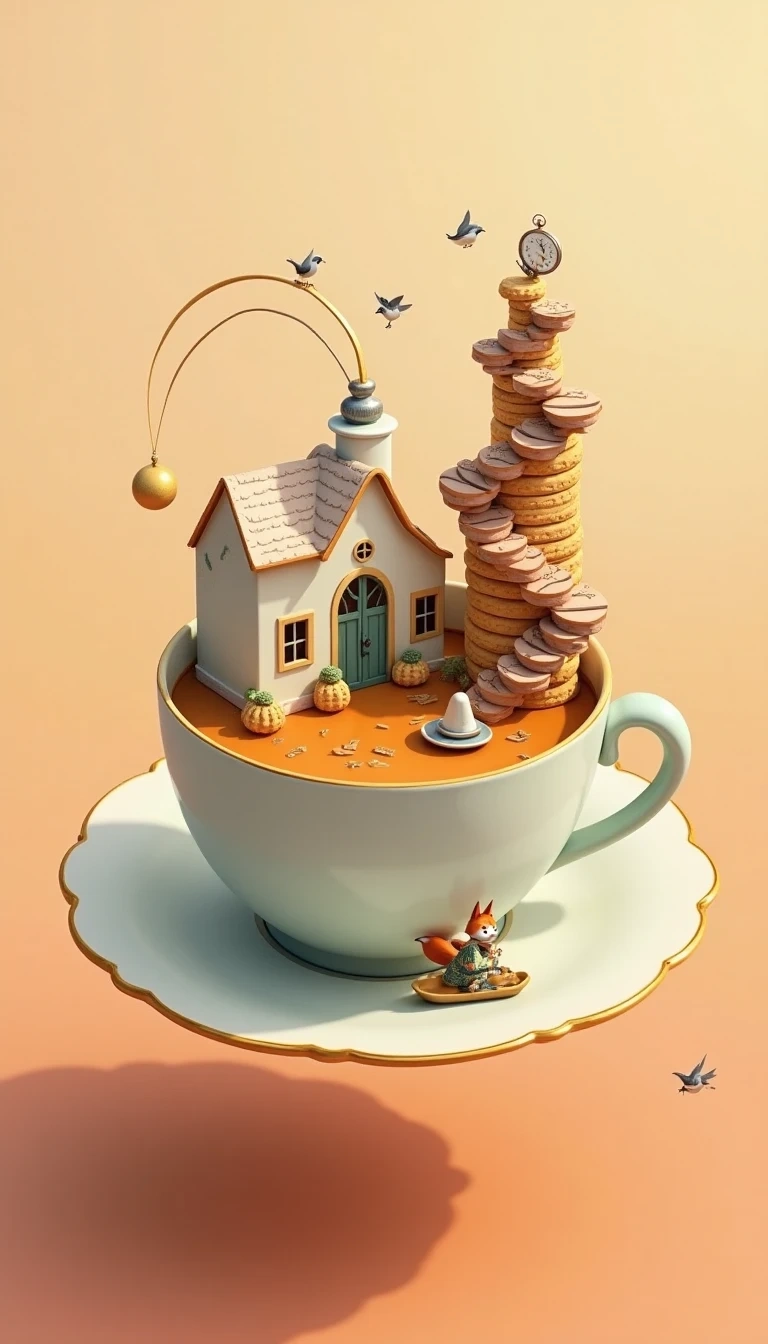
Whimsical art is less a movement with a manifesto than a long-running habit of the imagination. It shows up wherever artists have let ordinary things behave in impossible ways: a teacup that holds a harbor, a snail that carries an observatory, a geometric block that would rather dance than hold up a wall.
Where whimsical art comes from
The roots are old and familiar. Folk tales and fables gave animals jobs and opinions. Children's book illustration turned those stories into pictures you could linger over, full of tiny doors and tidy details. Later, Surrealism showed that dream logic could sit comfortably inside a carefully painted scene.
What ties these threads together is a particular tone. Whimsical art is playful but rarely mocking. It is strange, but kind. It usually keeps a few things steady so the odd parts feel believable.
What defines the style
A few traits come up again and again:
- Familiar objects in unfamiliar roles. Sugar cubes become cottages, clouds become creatures.
- Small scale and close detail. Scenes often feel like model towns or pages you could step into.
- Visible handcraft. Gouache, woodcut, risograph grain and clay keep the fantasy grounded in touch.
- Gentle humor. The joke is affectionate, never cruel.
- A quiet story. Something is always happening, even if it is only a slow journey.
The wallpapers
The three pieces at the top show the range. The Teacup Archipelago Post Office is whimsy at its coziest: an isometric town inside a cup of tea, painted in velvety gouache, where paper boats carry envelopes and a fox runs the post office. The model-town viewpoint is a classic storybook device.
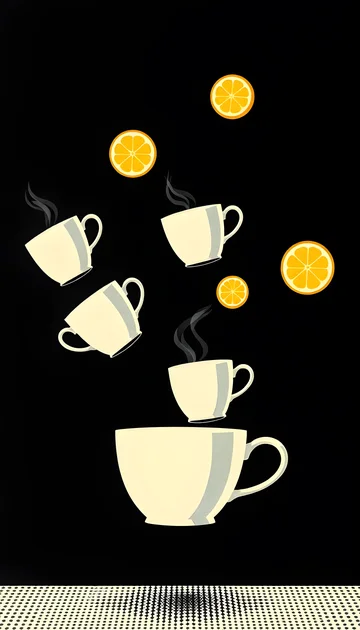
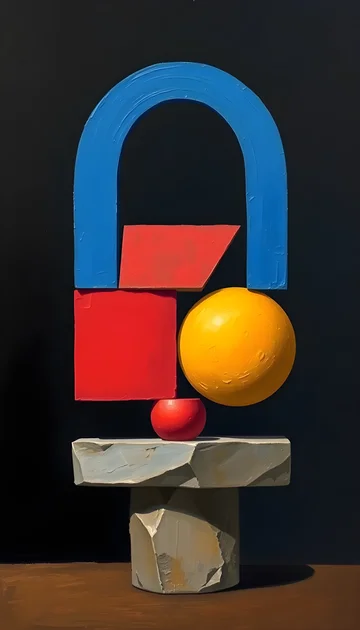
The Geometry of Floating Teacups plays a different game, setting porcelain cups and blood-orange wedges adrift against the strict order of a Swiss-style grid. The whimsy comes from the collision between discipline and daydream. Equilibrium of the Playful Monolith does the same with Bauhaus shapes, turning arcs, spheres and wedges into characters in a balancing act, built up in thick palette-knife strokes of vermilion, cobalt and ochre.
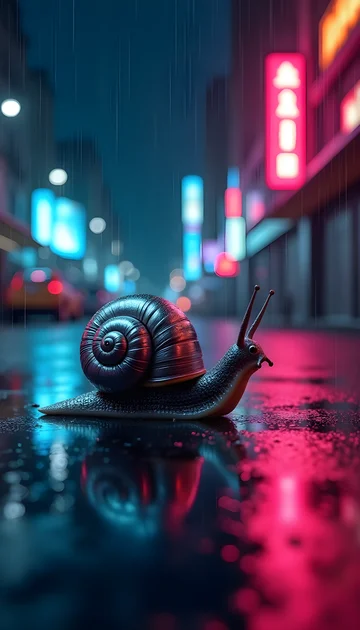
The Nocturne of the Chrome Gastropod sends a mirror-bright snail through a rain-slicked neon city. Heavy impasto oil gives the sleek chrome and wet asphalt real grit. The humor lies in the mismatch: the most futuristic thing on the street is also the slowest.

Slumber of the Cumulus Leviathan begins with a childhood habit, lying on a grassy slope and seeing animals in the clouds, and simply takes it at its word. Risograph grain and slight color misalignments give weight to something made of air, while the golden light borrows from anime skyscapes.
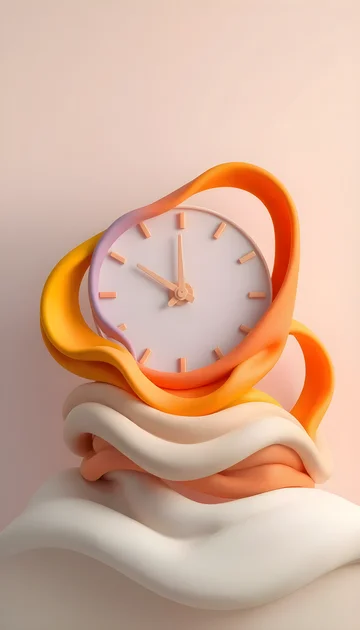
The Kinetic Playform is the most abstract piece here, with no characters at all. Ribbons of soft matte plasticine in aquamarine, papaya and lemon loop through the air, and small surface imperfections keep the sculptor's hand in view. It shows that whimsy can live in material and motion alone.
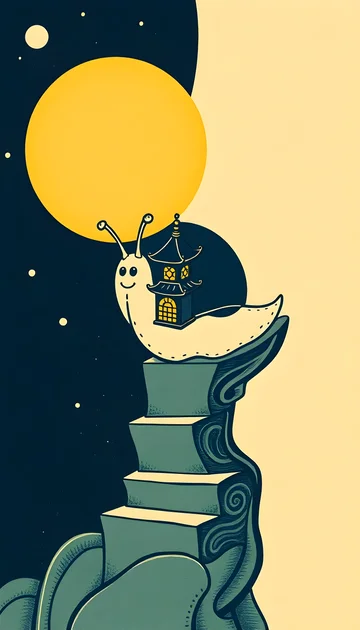
The Snail of Midnight Parables is pure fable: a great snail crossing bridges of fallen stars, its shell a paper-lantern observatory lit by fireflies. Relief woodcut lines and crisp contours give it the feel of an illustrated folk tale, with amber windows glowing against deep blue-black.

The Nocturne Conservatory follows a sky creature carrying a small glass greenhouse of glowing plants through the night. Layered risograph inks blend storybook surrealism with the soft haze of an impressionist dusk, and the warm coral and gold of the lantern light stand out against the dark.
Why whimsical art works on a phone screen
A lock screen is seen in glances, dozens of times a day. Whimsical art rewards that kind of looking. The first glance gives you a shape and a mood; later glances turn up a fox postmaster, a stamped envelope, a firefly in a window.
Many of these pieces are also built tall, with a single figure or journey moving through the frame, which suits a phone held upright. Several sit on deep, dark backgrounds, so the clock and notifications have clear space while the bright details glow around them.
And there is the tone. Whimsy is light without being loud. It offers a small, kind surprise each time the screen wakes, which is a good thing to keep in your pocket.
In the Morrow app, each of these wallpapers comes with its short story, also narrated, and a new one arrives every morning.