
What Is Surreal Art? 8 Wallpapers in the Style
Floating islands, impossible stairs and calm, dreamlike light: how surrealism works, shown through eight phone wallpapers
Surreal art paints things that cannot happen as if they were perfectly ordinary. A stone tower rests on a sea of mist, a snail carries an observatory on its back, a row of pillars stands in a floor of mercury. The calm is the point. The scene is impossible, and it is shown with complete confidence.
Where surrealism comes from
Surrealism began as a movement in Paris in the 1920s, gathered around the poet André Breton. Its artists wanted to reach the logic of dreams and the unconscious mind and set it down without apology. Painters such as Salvador Dalí, René Magritte and Max Ernst became its best-known names, and the quiet, uneasy city squares of Giorgio de Chirico were an important influence on it.
Today the word surreal is used more loosely, for any image that borrows dream logic. The wallpapers below belong to that wider sense. None of them copies a historical painting, but each one uses the movement's habits.
What defines surreal art
A few traits come up again and again:
- Impossible physics. Objects float, gravity reverses, water behaves like something else.
- Familiar things in the wrong place or at the wrong scale.
- Clear, careful rendering, so the strange feels real rather than chaotic.
- Deep, open space: long horizons, empty skies, a sense of stillness.
- Strong, theatrical light, often at dusk or at night.
The wallpapers
The three pieces at the top show how far the style can stretch.
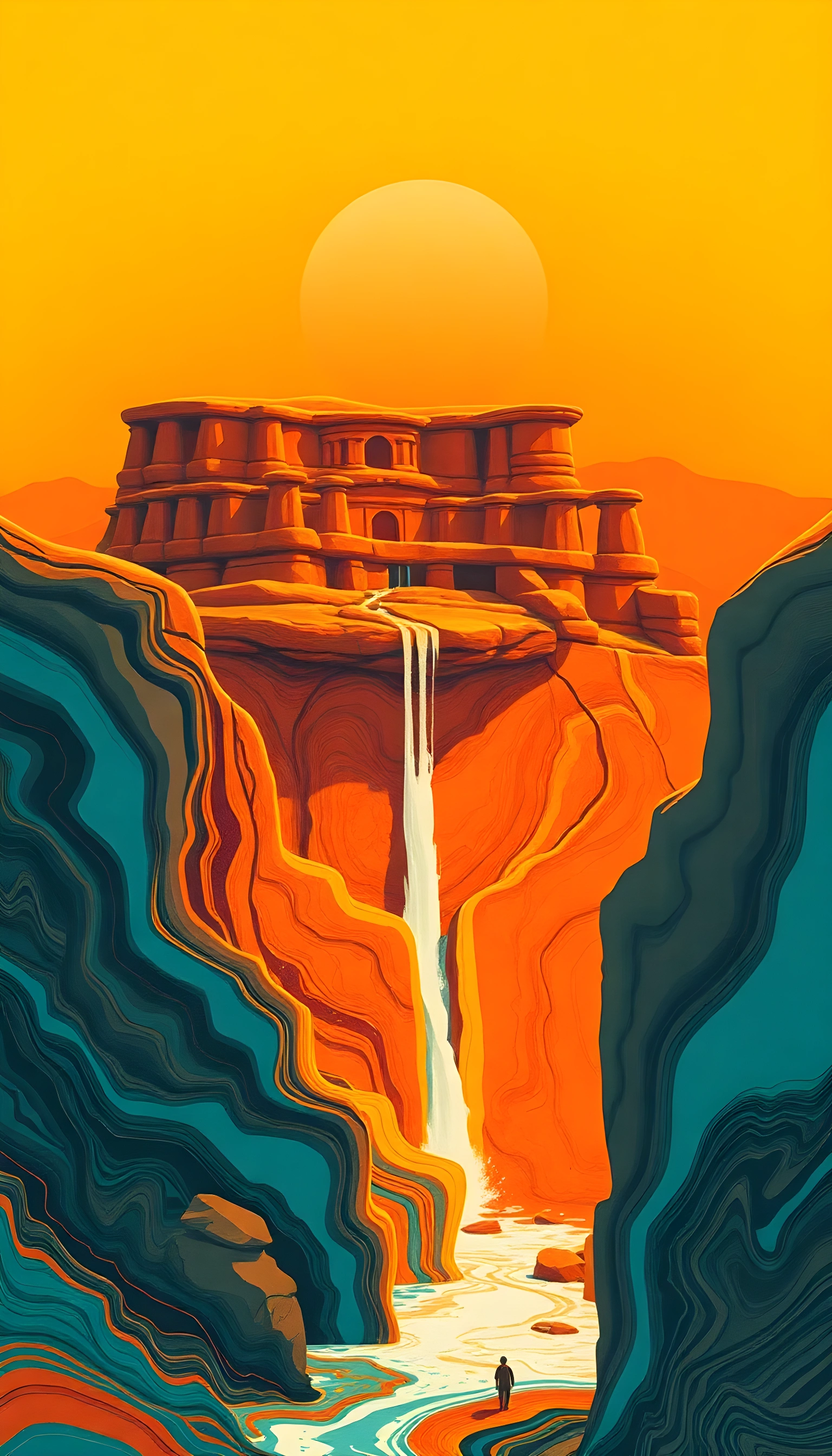
The Suspended Terraces of Aethel-Noor imagines a travel poster for a place where gravity runs backwards and water moves like thick wet paint. It pairs the flat, orderly shapes of mid-century gouache posters with the swirls of an acrylic pour, turquoise and vermilion folding into each other along tiered sandstone cliffs. The poster promises a holiday; the destination could never exist.
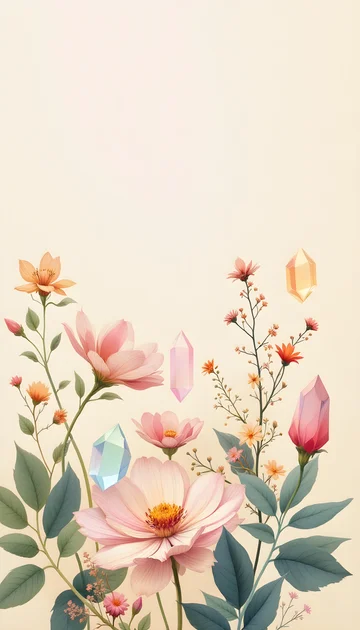
Prismata of the Pale Arboretum is the quietest of the set. Crystalline prisms hover over delicate plants drawn in the lines of woodcut engraving, bending light into soft bands of colour. Floating glass laid over an old printmaking technique gives it the displaced feeling of a dream remembered in daylight.
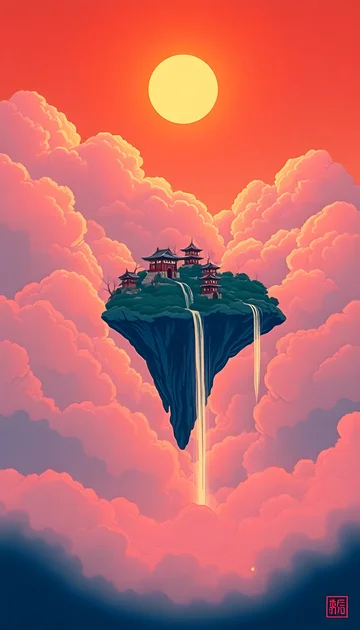
Aethelgard in the Golden Veil borrows the craft of Japanese Shin-Hanga woodblock prints and sets it among fantasy skies. Islands with timber eaves drift through towers of cloud, and waterfalls pour from their edges and turn to mist before they reach any ground. Floating land is one of the oldest surreal images, and the amber sunset keeps it peaceful rather than alarming.
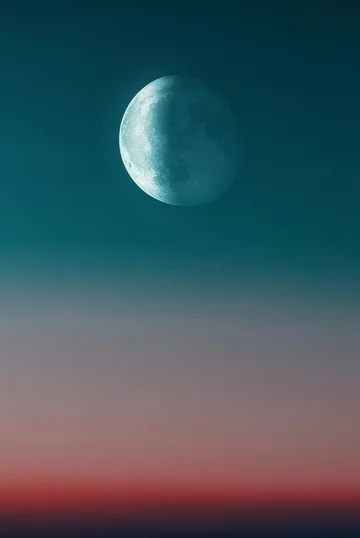
The Lantern Observatory of Aster is surreal through scale and combination. A slow creature carries a whole lantern observatory inside its spiral shell, its small brass-trimmed windows glowing gold against an indigo night. Carved in cherrywood and printed on heavy cotton paper, it has the feel of an old storybook in which nothing is questioned.
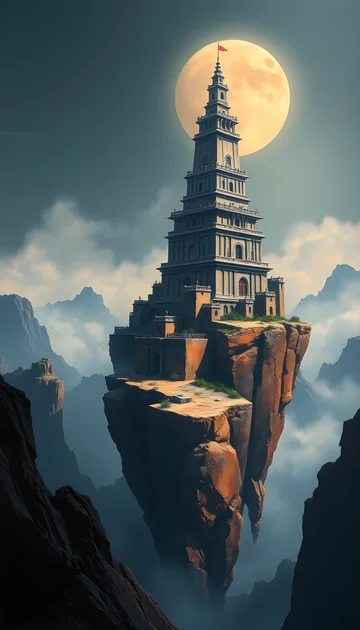
The Gilded Monolith of Slumbering Moons rests above a sea of mist with no ground beneath it. Its archways and facets are built from heavy impasto oil worked with a palette knife, then sharpened with clean graphic geometry. The arches lit amber against deep shadow recall the empty, glowing arcades that run through so much surreal painting.
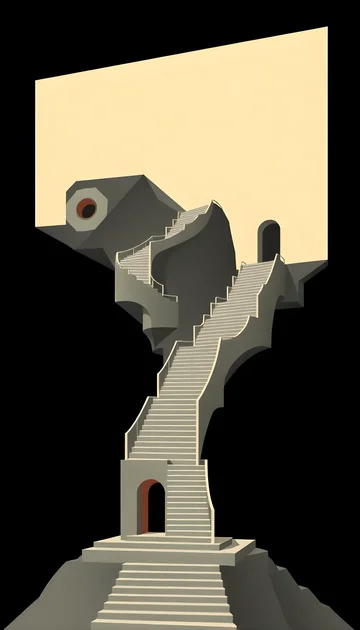
Cartography of the Mirage brings in the precision of Swiss modernist typography and impossible isometric geometry. Stairs climb into other dimensions and monolithic arches frame nothing at all, set against a midnight ground with sharp flashes of red. It shows that surreal art does not have to be soft: the logic is strict, it just leads somewhere impossible.
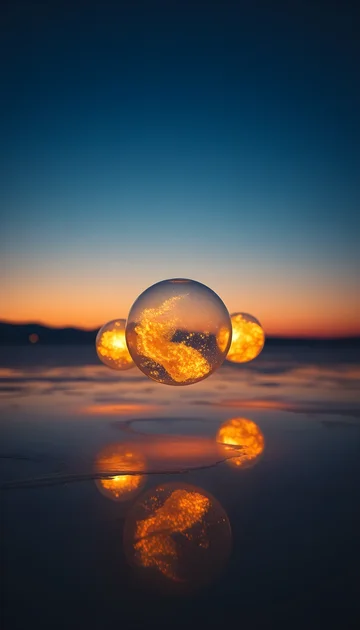
The Archive of Floating Phosphor fills a twilight space with glass spheres, each holding a small storm of golden light, above a mirrored ground that repeats them endlessly. The look of vintage instant film softens every edge with gentle colour imperfections. That blur is the texture of half-remembered dreams.
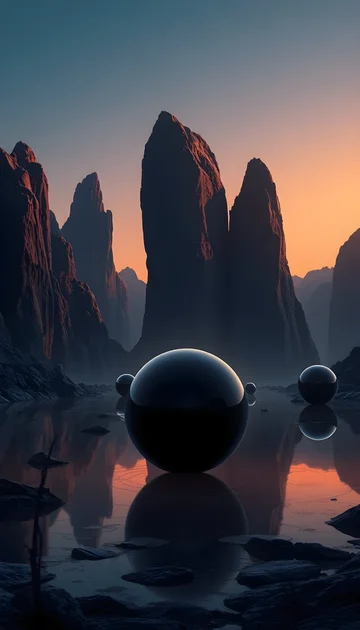
Avenue of the Mirrored Monoliths rises from a floor of liquid mercury, with polished quicksilver orbs drifting slowly between the pillars in an endless dusk. It is drawn with clean vector lines and cinematic lighting. The long receding avenue is a classic surreal stage: a deep, silent space waiting for something to happen.
Why surreal art works on a phone screen
Surreal pictures tend to be built from a single strong idea set in a lot of open space. That suits a lock screen well. Wide skies and empty upper areas leave room for the clock, while the main image sits lower down or in the centre and still reads at a small size.
The dark, dusky palettes many of these pieces share are easy on the eyes at night, and the warm gold accents keep them from feeling cold. And because the scenes are impossible, they reward a second look. Each wallpaper in Morrow comes with a short story about where it came from, which gives you something to think about when you glance down.
A new wallpaper arrives in the app every morning, and surreal pieces like these turn up often.