
What Is Microscopic Art? 8 Wallpapers in the Style
Orbitals, particles and cells drawn as if seen through a lens, in etching, ink, glass and clay
Microscopic art pictures the world at a scale the eye cannot reach on its own: cells, crystals, droplets, atoms and the orbits of electrons. It borrows the look of scientific observation and turns it into something to sit with rather than measure.
The eight wallpapers below all belong to this style, but each one reaches it through a different medium, from copperplate etching to clay to ray-traced glass.
Where microscopic art comes from
The style grows out of scientific illustration. Once lenses opened up the very small, naturalists began drawing what they saw: the cells of a cork, the eye of a fly, the glassy skeletons of single-celled sea creatures. Because there was no camera, these images were made by hand and printed from engraved plates, and many of them are as beautiful as they are accurate. Ernst Haeckel's plates of radiolarians and jellyfish are the best-known example of that blend of science and ornament.
Later, photography through the microscope added new textures: soft focus, glowing edges and sudden colour where light passes through a thin sample.
What defines the style today is a handful of traits. Forms are rounded, cellular or orbital rather than angular. Compositions often float on a dark field, the way a specimen sits under a lens. There is a pull between order and chaos, with neat geometry next to blooming, fluid shapes. And there is a sense of scale being reversed, so that something unimaginably small fills the whole frame.
The wallpapers
Chronicles of the Planck Garden
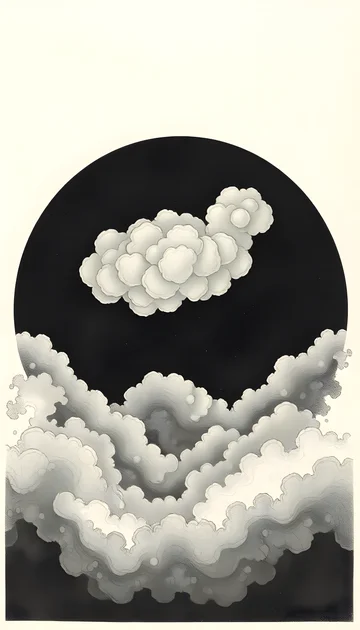
The first image in the grid above goes straight back to the naturalist's notebook. It is made in the manner of 19th-century etching and layered lithography, with electrons circling crystalline spires like fireflies. Deep blacks set against warm parchment tones give it the feel of an old illustrated plate.
Oscillations of the Unseen
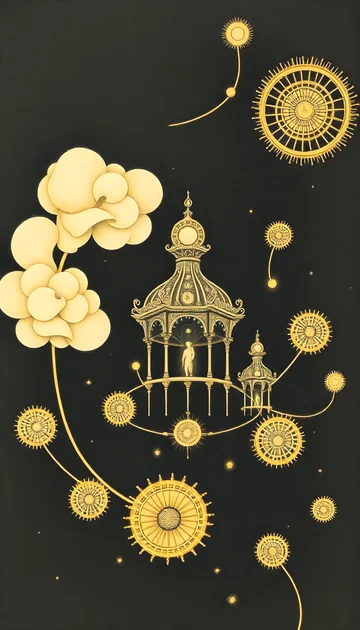
The second piece in the grid also uses fine copperplate hatching, here to trace the orbits of electron shells. The lines soften into halos of pale gold and celadon, which brings in the glow of light passing through a lens.
Eigenstate in Sumi
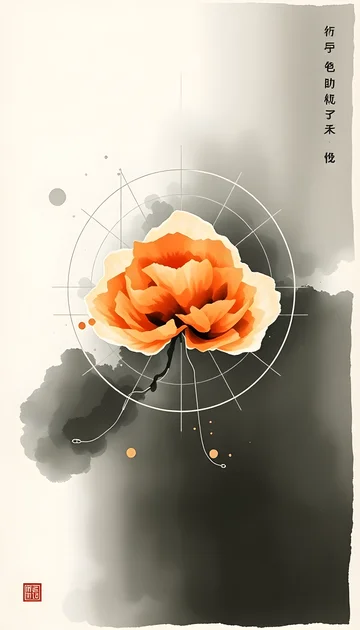
The third uses Japanese Sumi-e ink wash for an electron's cloud-state, the pigment spreading across wet fibres. Around it sit crisp crosshairs, constants and sans-serif numerals in the spirit of mid-century Swiss typography. It is the style's tension between fluid form and measured order, made very literal.
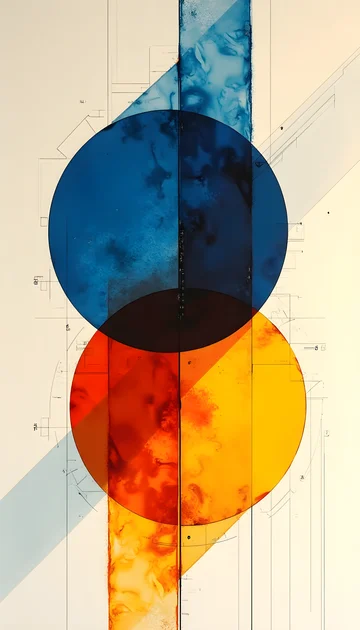
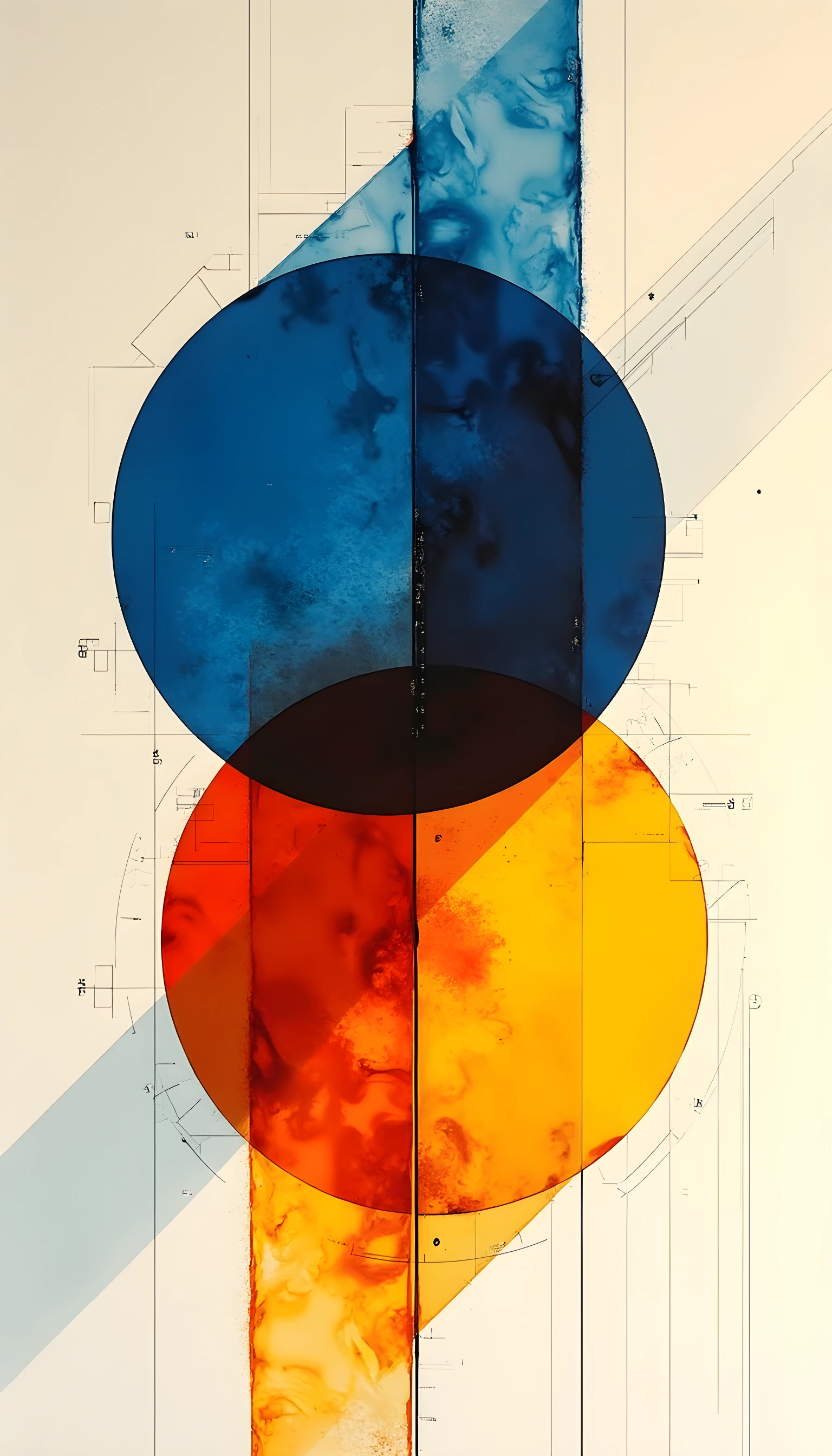
Quantum Lattice No. 7 sets marbling, micro-droplets and cellular separation inside Bauhaus grids, arcs and arrows. Rings of cobalt and cinnabar hold small worlds within precise quadrants. It reads almost like a blueprint for something too small to see.
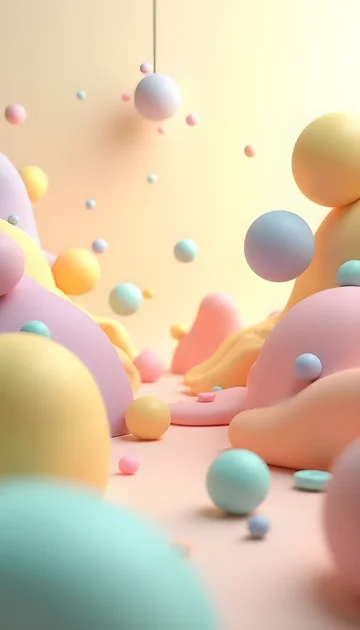
Subatomic Playground takes the opposite mood. Orbitals become tracks for little matte-clay spheres, and bonds look like spun sugar and bent wire in soft peach, mint, butter yellow and lilac. The rounded, floating forms of the style are all here, just made friendly and touchable.
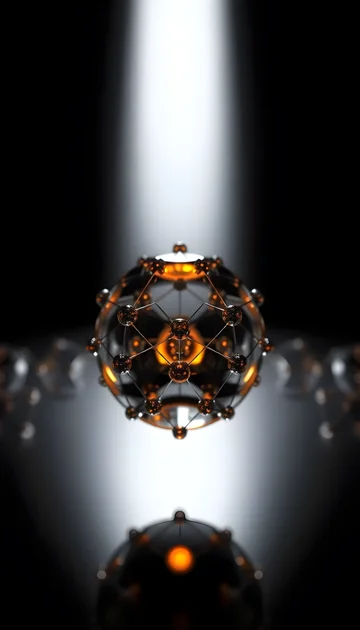
The Quantum Monolith renders the subatomic world as ray-traced glass in near-black and charcoal, broken by flashes of amber. Light refracts into a maze of shadows, close to how a microscope bends light through a sample, but staged with the moodiness of film noir.
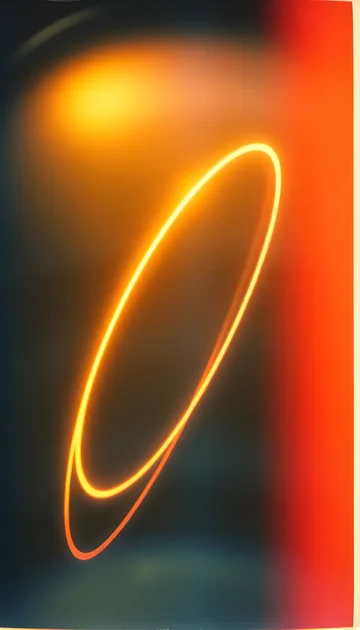
Baryon Mirage imagines particles colliding inside a single drop of cryogenic liquid, captured as if on vintage instant film. Light leaks and grain give it the look of an old archive photograph. The dark ground with spots of gold, teal and violet is classic specimen-under-glass composition.

Superposition in Zinc & Amber is built from overlapping spot-colour inks: zinc teal, warm amber and coral. Dithered halftone dots echo the idea of discrete quanta, while the layered colour recalls impressionist studies of light.
Why microscopic art works on a phone
A lock screen is small and held close, which suits images that were always meant to be looked at up close. Microscopic art usually places one central form on a dark background, so there is calm space around the clock and the notifications rather than busy detail behind them.
The style also rewards a second look. Hatching, ink bloom, halftone dots and film grain show up when you pause on the screen, and the reversal of scale gives a small private sense of wonder each time you pick up the phone.
If you want more, a new wallpaper arrives in Morrow every morning at 8, each with a short story about where it came from.